


Showing posts with label Top Ranks. Show all posts
Showing posts with label Top Ranks. Show all posts
World's Top 10 Infrastructure Projects
KPMG's second edition of the 'Infrastructure 100: World Cities Edition', showcases 100 of the most innovative and inspiring urban infrastructure projects from around the world.
This study provides insight into the innovations that make them 'Cities of the Future' - places where people want to live and do business, says KPMG.
The aim of Infrastructure100 is to showcase and celebrate one hundred examples of great projects underway in cities around the world.
Of the 100 projects, 10 were selected by a global judging panel as being the most noteworthy within each project category.
This study provides insight into the innovations that make them 'Cities of the Future' - places where people want to live and do business, says KPMG.
The aim of Infrastructure100 is to showcase and celebrate one hundred examples of great projects underway in cities around the world.
Of the 100 projects, 10 were selected by a global judging panel as being the most noteworthy within each project category.
1. Urban Mobility: East Side Access, New York City, United States of America


2. Global Connectivity: Delhi-Mumbai Industrial Corridor, Delhi to Mumbai, India

 The $90 billion project will stretch across seven states and link the nation's capital, Delhi, with the financial capital, Mumbai.
The sheer scale and far-reaching impact of the project impressed the judges with plans including a high-speed rail line for freight, a six-lane expressway and a 4,000 megawatt power station.
The idea is to develop centres of industrial production along the length of the corridor. The project plan includes nine industrial zones and 24 new cities.
3. Urban Regeneration: Oresund Regional Development, Denmark and Sweden

The Oresund Regional Development project creates a cross-border economic zone between Sweden and Denmark, focused on Malmo and Copenhagen.
The two cities are connected by an impressive new international crossing and share a considerable amount of physical infrastructure.
The aim is to continue to foster growth and connectivity via the proposed 18 kilometer Fehmarnbelt Tunnel, which will bring Germany and Scandinavia closer together.
The aim is to continue to foster growth and connectivity via the proposed 18 kilometer Fehmarnbelt Tunnel, which will bring Germany and Scandinavia closer together.

4. Education: Princess Nora Bint Abdul Rahman University for Women, Riyadh, Saudi Arabia

Princess Nora Bint Abdul Rahman University for Women was widely lauded by the judges and is considered a major step in obtaining equal access to education for women in the Middle East.
The self-contained campus will cover 8 million square meters just outside Riyadh and accommodate 40,000 students.
The self-contained campus will cover 8 million square meters just outside Riyadh and accommodate 40,000 students.
The university will have the capacity to accommodate 60 per cent of the city's high-school graduates and will offer degrees in medicine, pharmacy, management and IT.
According to the judges, the project has a "generational theme" and its effect will ripple across the whole country for years to come.
According to the judges, the project has a "generational theme" and its effect will ripple across the whole country for years to come.
5. Healthcare: Royal London Hospital, London, UK

The Royal London Hospital at White chapel in the United Kingdom is one of the oldest operating healthcare facilities in England.
The Victorian-era hospital – often associated with the grittiness of the capital's East End – was redeveloped and funded through a 1.1 billion pound PFI.
Following its redevelopment, the new hospital reopened its doors in March 2012 and is now one of Britain's largest, most advanced healthcare facilities.

The new hospital has 1,248 beds, an increase of 186 on the previous facility, with over 40 percent in single rooms with en suite facilities.
Wards are light and airy with natural ventilation and separate areas for women and men, and the 22 operating theaters are one-third larger than their predecessors.
6. Water: Tuas II Desalination Plant, Tuas, Singapore

In Singapore, the Tuas II Desalination Plant will serve a vital function, delivering 318,500 cubic meters (70 million gallons) of water per day for a 25-year concession period from 2013 to 2038.
Singapore currently relies on rainfall and imports from neighboring Malaysia for freshwater supplies.

The wealthy city-state has made several investments in recent years to become more independent and meet the needs of an increasing population.
7. New and Extended Cities: Tianjin Eco City, Tianjin, China

In the Far East, judges were impressed with Tianjin Eco-city being developed with "practical" technology on challenging arid terrain in northern China.

The city is an ambitious economic collaboration between China and Singapore to pilot a more liveable alternative to some of the country's polluted megacities.
With an advanced light rail system, solar energy and smart grid technology, Tianjin eco-city is set to create a new benchmark among global cities.
8. Recycling and Waste Management: Deep Tunnel Sewerage System, Kranji to Changi, Singapore

The Deep Tunnel Sewerage System in Singapore has been under construction since 2000 and is scheduled for completion in 2020.

The massive scheme has been designed to address all of the city-state's long-term needs for used water collection, treatment, reclamation and disposal.
The award-winning system works entirely by gravity, thus eliminating the need for pumping stations and the risks of used water overflows as well.
9. Urban Energy Infrastructure: Cidade Inteligente, Buzios, Brazil
Brazil is at the forefront of intelligent energy systems with its impressive Cidade Inteligente Buzios project.


Among the benefits for consumers are the possibilities of having discounted energy prices dependent on time of usage, consumption control of household appliances, energy savings through the installation of new LED street lighting and increased energy efficiency in public buildings.
10. Communications Infrastructure: BRICS Cable Project, South Africa and Mauritius
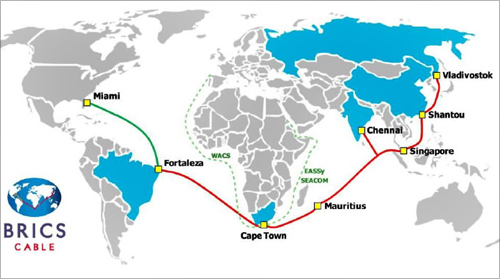

A hugely ambitious initiative designed to boost international communication between cities and global access to high-speed internet is the BRICS Cable Project.
As the acronym suggests, this initiative aims to connect the BRIC markets and the United States with a 34,000 kilometre two-fiber pair submarine cable with capacity of 12.8Tbit/s via cities like Jacksonville (USA), Fortaleza (Brazil), Cape Town (South Africa), Port Louis (Mauritius), Chennai (India), Singapore, Shantou (China) and Vladivostok (Russia).
With enhanced internet connectivity, the cable would boost trade links and economic competitiveness.
Most Competitive Cities in India
Latest report has been founded on four pillars - the factor conditions, demand conditions, context for strategy and rivalry, and the quality of supporting and related industries.
 India's capital, New Delhi (with a score of 69.732) has emerged the most competitive city in the country as per the India City Competitiveness Report-2012, compiled by the Institute for Competitiveness (IFC) that conducts studies in this area for use by businesses and governments.


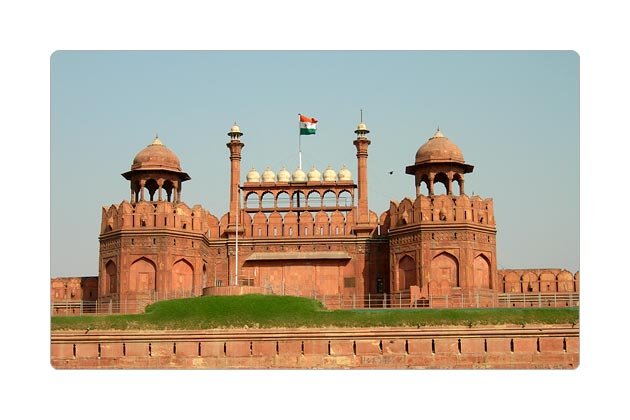

Faridabad, with its high growth has drastically improved in its ranking and holds the 29th spot. Similarly Guwahati recorded a wide improvement in its position," says the report, unveiled Wednesday to coincide with Singapore Prime Minister Lee Hsien's visit here.

Mumbai (67.856) The fifth edition of the India City Competitiveness Report is based on a model that has been established by celebrated management guru, Michael E. Porter, Bishop William Lawrance University Professor, based at Harvard Business School.

Chennai (62.323) Regarding New Delhi, the report says the city has managed to demonstrate a phenomenal growth over a period of time by balancing demand and development in equal measure. The two areas it is found lagging in are administrative and institutional support.

Hyderabad (61.782) The report also says that Noida, another city with close proximity to New Delhi, is now giving tough competition to the metros, even as Pune and Ahmedabad, which had very high.

Kolkata (61.464) Among the smaller cities, while Coimbatore, Mysore, Madurai and Guwahati climbed up, Surat, Lucknow, Agra and Allahabad dropped in their rankings.
Gurgaon (61.167) "Undoubtedly, Indian cities have the required potential to make their mark across the globe. this is clearly evident with igh urbanization rate of these cities and by the trend of their growth," says the report. However, it is required that Indian cities work on their strong.

Bengaluru (61.100) Porter's model is founded on four pillars -- the factor conditions, demand conditions, context for strategy and rivalry, and the quality of supporting and related industries. These are further divided into 12 sub-pillars to give information on 50 top cities.

Noida (60.406) "Cities are drivers of any economy. Their growth will enhance the growth of states and eventually that of the country. In the past few years, they have risen from their age-old shells and proving their potential on the global front," says IFC chair Amit Kapoor.

Pune (59.854) When benchmarked globally, Indian cities have much to catch up. Delhi, which takes the top slot in the country, is benchmarked at 46.7 -- which is way below 71.4 for New York, 70.4 for London, 55.2 for Shanghai and 69.3 for Hong Kong.


Top 10 Most Dangerous Dogs
Are you afraid of dogs? What do you do when you see a dog in the street? If you don't do much, then I recommend that you RUN...because if they are one of these dogs, then you will surely need to visit the hospital and get a few shots right in the butt.


.jpg) 8. Chow Chow
8. Chow Chow
The chow is a sturdily built dog, square in profile, with a broad skull and small, triangular, erect ears, which are rounded at the tips. The breed has a very dense double coat that can be either smooth or rough. The fur is particularly thick around the neck, giving the distinctive ruff or mane appearance. The coat may be one of five colors including red, black, blue, cinnamon/fawn, and cream.
7. Presa Canario
.jpg) The Perro de Presa Canario is a large Molosser-type dog breed originally bred for working livestock. The name of the breed is Spanish, means "Canarianblood hound," and is often shortened to "Presa Canario" or simply "Presa." The breed is also called Dogo Canario, mean Canarian Molosser.
The Perro de Presa Canario is a large Molosser-type dog breed originally bred for working livestock. The name of the breed is Spanish, means "Canarianblood hound," and is often shortened to "Presa Canario" or simply "Presa." The breed is also called Dogo Canario, mean Canarian Molosser.
Presas are of strong character and are dominant animals requiring early socialization and obedience training In some situations, the Presa can be aggressive toward other dogs and suspicious of strangers Once the dog has been properly socialized and trained this becomes the exception rather than the rule. Many Presas share their homes with children, other dogs, cats, horses and other farm animals.
 6. Doberman Pinscher
The Doberman Pinscher (alternatively spelled Dobermann in many countries) or simply Doberman, is a breed of domestic dog originally developed around 1890 by Karl Friedrich Louis Dobermann. Dobermann Pinschers are among the most common of pet breeds, and the breed is well known as an intelligent, alert, and loyal companion dog. Although once commonly used as guard dogs or police dogs, this is less common today.
.jpg) 5. Alaskan Malamute
5. Alaskan Malamute
The Malamute retains more of its original form and function than many other modern breeds. If a dog owner cannot cope with a dog that will not comply with the owner's every command, a more compliant breed should be selected. This dog has a long genetic foundation of living in the harshest environment imaginable, and many of its behaviors are evolved to conform with "survival of the fittest." Independence, resourcefulness, and primitive behaviors are common in the breed. While intelligent, they are widely believed to be one of the most difficult dogs to train. However, if the training is kept fun for the dog and not repetitively boring, success is within reach.
.jpg) 4. Husky
4. Husky
The Siberian is a medium-size, dense-coat working dog breed that originated in eastern Siberia. The breed belongs to the Spitz genetic family. It is recognisable by its thickly furred double coat, sickle tail, erect triangular ears, and distinctive markings.
Huskies are an active, energetic, and resilient breed whose ancestors came from the extremely cold and harsh environment of the Siberian Arctic. Siberian Huskies were bred by the Chukchi of Northeastern Asia to pull heavy loads long distances through difficult conditions. The dogs were imported into Alaskaduring the Nome Gold Rush and later spread into the United States and Canada. They were initially sent to Alaska and Canada as sled dogs but rapidly acquired the status of family pets and show dogs.
.jpg) 3. German Shepherd
3. German Shepherd
The German Shepherd Dog is a breed of large-sized dog that originated inGermany. The German Shepherd is a relatively new breed of dog, with its origin dating to 1899. As part of the Herding Group, the German Shepherd is a working dog developed originally for herding and guarding sheep. Because of its strength, intelligence and abilities in obedience training it is often employed in police and military roles around the world. German Shepherds currently account for 4.6% of all dogs registered with the American Kennel Club. Due to its loyal and protective nature, the German Shepherd is one of the most registered of breeds.
.jpg) 2. Rottweiler
2. Rottweiler
The Rottweiler is a medium to large size breed of domestic dog that originated in Rottweil, Germany. The dogs were known as "Rottweil butchers' dogs" (German: Rottweiler Metzgerhund) because they were used to herd livestock and pull carts laden with butchered meat and other products to market.[1]Some records indicate that earlier Rottweilers may have also been used for hunting, although the modern Rottweiler has a relatively low hunting instinct.
The Rottweiler was employed in its traditional roles until the mid-19th century when railroads replaced droving for getting livestock to market. While still used in herding, Rottweilers are now also used in search and rescue, as guide dogs for the blind, as guard or police dogs, and in other roles.
.jpg) 1. Pit bull
1. Pit bull
A Pit bull is one of several breeds of dog in the molosser breed group. Many jurisdictions that restrict ownership of pit bulls, including Ontario, Canada, Miami, Florida, U.S.[2] and Denver, Colorado, U.S.,apply the restriction to the modern American pit bull terrier or any other dog that has the substantial physical characteristics and appearance of being a cross of this breed. However a few jurisdictions, such as Singapore and Franklin County, Ohio, U.S., also classify the modern American Bulldog as a "pit bull-type dog", while in the United Kingdom a pit bull is an American pit bull terrier. All of the breeds share a similar history, with origins rooted from the bulldog and a variety of terriers. The dogs called bull terriers before the development of the modern bull terrier in the early 20th century may also be called pit bulls. Pit bulls are popular breeds used in dog fighting.
Widely reported pit bull attacks have resulted in breed-specific legislation being enacted in several jurisdictions, and in increased premiums for liability insurance. Some airlines have placed restrictions on air travel for pit bulls, though in some instances the restrictions are in place for the dogs' own well-being.

10. Boxer
Developed in Germany, the Boxer is a breed of stocky, medium-sized, short-haired dog. The coat is smooth and fawn or brindled, with or without white markings. Boxers are brachycephalic (they have broad, short skulls), and have a square muzzle, mandibular prognathism (an underbite), very strong jawsand a powerful bite ideal for hanging on to large prey. The Boxer was bred from the English Bulldog and the now extinct Bullenbeisser and is part of theMolosser group.

9. The Dalmatian
The Dalmatian (Croatian: Dalmatinac, Dalmatiner) is a breed of dog whose roots are often said to trace back to Dalmatia, a region of Croatia where the first illustrations of the dog have been found.[1] The Dalmatian is noted for its unique black- or brown-spotted coat and was mainly used as a carriage dog in its early days. Today, this dog remains a well loved family pet and many dog enthusiasts enter their pets into the competitions of many kennel clubs.
.jpg)
The chow is a sturdily built dog, square in profile, with a broad skull and small, triangular, erect ears, which are rounded at the tips. The breed has a very dense double coat that can be either smooth or rough. The fur is particularly thick around the neck, giving the distinctive ruff or mane appearance. The coat may be one of five colors including red, black, blue, cinnamon/fawn, and cream.
7. Presa Canario
.jpg)
Presas are of strong character and are dominant animals requiring early socialization and obedience training In some situations, the Presa can be aggressive toward other dogs and suspicious of strangers Once the dog has been properly socialized and trained this becomes the exception rather than the rule. Many Presas share their homes with children, other dogs, cats, horses and other farm animals.

The Doberman Pinscher (alternatively spelled Dobermann in many countries) or simply Doberman, is a breed of domestic dog originally developed around 1890 by Karl Friedrich Louis Dobermann. Dobermann Pinschers are among the most common of pet breeds, and the breed is well known as an intelligent, alert, and loyal companion dog. Although once commonly used as guard dogs or police dogs, this is less common today.
.jpg)
The Malamute retains more of its original form and function than many other modern breeds. If a dog owner cannot cope with a dog that will not comply with the owner's every command, a more compliant breed should be selected. This dog has a long genetic foundation of living in the harshest environment imaginable, and many of its behaviors are evolved to conform with "survival of the fittest." Independence, resourcefulness, and primitive behaviors are common in the breed. While intelligent, they are widely believed to be one of the most difficult dogs to train. However, if the training is kept fun for the dog and not repetitively boring, success is within reach.
.jpg)
The Siberian is a medium-size, dense-coat working dog breed that originated in eastern Siberia. The breed belongs to the Spitz genetic family. It is recognisable by its thickly furred double coat, sickle tail, erect triangular ears, and distinctive markings.
Huskies are an active, energetic, and resilient breed whose ancestors came from the extremely cold and harsh environment of the Siberian Arctic. Siberian Huskies were bred by the Chukchi of Northeastern Asia to pull heavy loads long distances through difficult conditions. The dogs were imported into Alaskaduring the Nome Gold Rush and later spread into the United States and Canada. They were initially sent to Alaska and Canada as sled dogs but rapidly acquired the status of family pets and show dogs.
.jpg)
The German Shepherd Dog is a breed of large-sized dog that originated inGermany. The German Shepherd is a relatively new breed of dog, with its origin dating to 1899. As part of the Herding Group, the German Shepherd is a working dog developed originally for herding and guarding sheep. Because of its strength, intelligence and abilities in obedience training it is often employed in police and military roles around the world. German Shepherds currently account for 4.6% of all dogs registered with the American Kennel Club. Due to its loyal and protective nature, the German Shepherd is one of the most registered of breeds.
.jpg)
The Rottweiler is a medium to large size breed of domestic dog that originated in Rottweil, Germany. The dogs were known as "Rottweil butchers' dogs" (German: Rottweiler Metzgerhund) because they were used to herd livestock and pull carts laden with butchered meat and other products to market.[1]Some records indicate that earlier Rottweilers may have also been used for hunting, although the modern Rottweiler has a relatively low hunting instinct.
The Rottweiler was employed in its traditional roles until the mid-19th century when railroads replaced droving for getting livestock to market. While still used in herding, Rottweilers are now also used in search and rescue, as guide dogs for the blind, as guard or police dogs, and in other roles.
.jpg)
A Pit bull is one of several breeds of dog in the molosser breed group. Many jurisdictions that restrict ownership of pit bulls, including Ontario, Canada, Miami, Florida, U.S.[2] and Denver, Colorado, U.S.,apply the restriction to the modern American pit bull terrier or any other dog that has the substantial physical characteristics and appearance of being a cross of this breed. However a few jurisdictions, such as Singapore and Franklin County, Ohio, U.S., also classify the modern American Bulldog as a "pit bull-type dog", while in the United Kingdom a pit bull is an American pit bull terrier. All of the breeds share a similar history, with origins rooted from the bulldog and a variety of terriers. The dogs called bull terriers before the development of the modern bull terrier in the early 20th century may also be called pit bulls. Pit bulls are popular breeds used in dog fighting.
Widely reported pit bull attacks have resulted in breed-specific legislation being enacted in several jurisdictions, and in increased premiums for liability insurance. Some airlines have placed restrictions on air travel for pit bulls, though in some instances the restrictions are in place for the dogs' own well-being.